




Company Formation Malta
Limited company formation, holding structures, and business registration in Malta.
Learn more
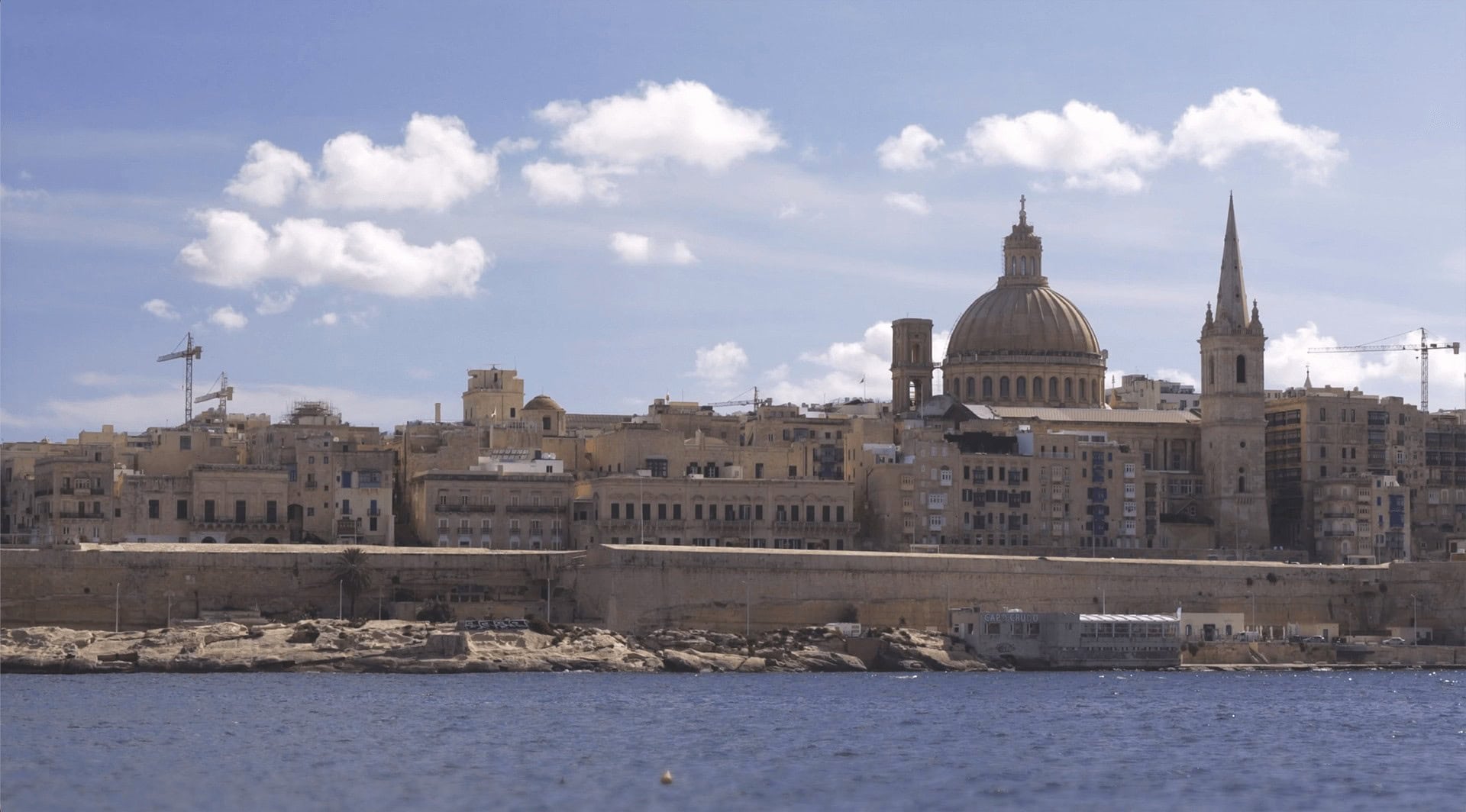
Jurisdiction Comparison
Bulgaria offers the lowest headline corporate tax in the EU, while Malta offers the lowest effective rate.
Independent analysis · Based in Malta since 2013
Bulgaria stands out for its simplicity: 10% flat tax on corporate profits and income, no progression, no special rules. The effective total tax burden for a Bulgarian company is around 14.5% (CT + dividends). Malta achieves an effective corporate tax rate of 5% via its EU-compliant refund system – and potentially 0% on dividends. Bulgaria scores with drastically lower cost of living (50% below Malta levels). Malta scores with legal certainty, suitability for holding structures, English as an official language, and international reputation. The right choice depends on revenue levels, business model, and personal priorities.
10 %
Bulgaria CT
Flat Rate since 2007
5 %
Malta effective
After 6/7 shareholder refund
Both
EU Members
Malta since 2004, Bulgaria since 2007
Both active
DTT Network
Includes UK, US, major EU states
Direct Comparison
Bulgaria
Malta
Corporate Tax
10% Flat Rate (lowest nominal rate in the EU)
35% nominal, 5% effective after shareholder refund
Effective Total Burden (CT + Dividend)
Approx. 14.5% (10% CT + 5% dividend tax)
Approx. 5% (after full 6/7 refund, dividends tax-free)
Income Tax (Individuals)
10% Flat Tax on all income types. Social security approx. 33% up to the contribution ceiling (EUR 1,917/month).
0 - 35% progressive. FITWI: 15% flat rate. Non-Dom: 0% on unremitted foreign income.
Dividend Taxation
5% WHT on dividends to individuals. 0% to EU parent companies.
0% under refund system. No additional withholding tax.
Holding Suitability
Limited. Participation Exemption only for dividends (not for capital gains).
Excellent. Participation Exemption for dividends AND capital gains. Proven infrastructure.
EU Membership
Since 2007. Schengen since 2025. Eurozone since 2026.
Since 2004. Schengen member. Euro since 2008.
DTT Network
Over 70 treaties, including UK, US, DE.
Over 70 treaties, including UK, US, DE.
Language / Authorities
Bulgarian (Cyrillic). Authorities operate only in Bulgarian. English common in Sofia.
English is an official language. All official processes, contracts, and tax returns in English.
Cost of Living
Very low. Rents 50%+ below Malta levels. Sofia 1-bed: EUR 400 - 600.
Medium to high. Comparable to Southern European cities. 1-bed Sliema: EUR 900 - 1,200.
Corruption / Legal Certainty
Weakest EU score in TI Corruption Index. Judicial independence limited.
EU mid-range. Common Law tradition. Reliable contract enforcement.
Crypto Taxation
10% Flat Tax on realised gains. Holding tax-free.
0 - 5% effective via structured corporate setup. Established regulatory ecosystem.
Bulgaria has established itself as a budget-friendly alternative for tax-motivated expats. The appeal lies in simplicity: 10% flat tax on corporate profits, 10% on personal income, no progression, no surcharges. Add to this cost of living at the lower end of the EU spectrum.
Company formation is straightforward. An EOOD (single-member private limited company) can be set up with just EUR 1 share capital. Ongoing compliance costs are low. For solopreneurs and small service providers who don't need a high-profile corporate image, this is a low-barrier entry point.
Since January 2025, Bulgaria has been a full Schengen member, and since January 2026 a member of the Eurozone. This eliminates currency risks entirely. The network of over 70 Double Tax Treaties, including major Western economies, offers tax planning security.
Where Bulgaria hits its limits: Bureaucracy in Bulgarian, a banking system that creates hurdles for foreigners, and corruption risks that are the highest in the EU. These factors aren't deal-breakers, but they belong in an honest assessment.


Social security contributions: If you pay yourself a salary in Bulgaria, expect a total burden of around 33% (employee and employer shares combined). Only income above the contribution ceiling (currently EUR 1,917 per month) attracts just the 10% income tax. For entrepreneurs with low salaries and high dividends, this is manageable. Those wanting a market-rate salary will pay more than the often-quoted 10%.
The banking situation: Bulgarian banks present high hurdles for foreigners opening accounts. KYC processes are lengthy, and communication is often solely in Bulgarian. International FinTech solutions work for daily life, but a local business account is required for tax compliance. Plan for several weeks.
Legal enforcement: Contracts under Bulgarian law are generally enforced, but the judiciary is slow and its independence limited. For international business relationships, experienced advisors recommend arbitration clauses (ICC, Vienna) rather than Bulgarian jurisdiction.
No Non-Dom status: Unlike Malta, Ireland, or the UK, Bulgaria offers no Non-Dom status. Tax residents are taxed on worldwide income – albeit at a low 10%, but without the option to exempt foreign income entirely.
“Bulgaria and Malta serve different profiles. Bulgaria is a solid EU option for budget-conscious entrepreneurs. For clients seeking to combine tax optimisation with legal certainty and international acceptance, Malta remains the stronger choice.”
Dr Jörg Werner
Founder, Dr. Werner & Partners
The choice between Bulgaria and Malta isn't about good or bad, but fit or misfit. Your business model, revenue volume, and personal priorities determine the answer.
Bulgaria may be the better choice if you are a solopreneur or freelancer with modest revenue looking to maximise the combination of 10% flat tax and extremely low living costs. It is also attractive for digital nomads seeking top-tier internet at minimal cost, and retirees wanting maximum purchasing power. Entrepreneurs looking to build a team of local professionals at low wage costs will find qualified staff in Sofia and Plovdiv.
Malta may be the better choice if you generate higher corporate profits and the effective tax rate of 5% (vs 10%) tips the scales. Those planning holding structures – especially with a planned exit (sale of shares) – need Malta's Participation Exemption on capital gains. For crypto investors, Malta offers an effective burden of 0% to 5% instead of Bulgaria's 10%. And those prioritising an English-speaking environment, international reputation, and proven legal certainty will find a more stable framework in Malta.
Rule of thumb: The higher the profit and the more complex the structure, the more the numbers favour Malta. The lower the budget and the simpler the model, the more attractive Bulgaria becomes.
Both jurisdictions offer EU-compliant holding regimes with tax exemptions on qualifying dividends (EU Parent-Subsidiary Directive). The crucial difference lies in capital gains.
Malta fully exempts gains from the sale of qualifying participating interests (Participation Exemption). For entrepreneurs building for the long term with an exit in mind, this is a significant advantage. Bulgaria taxes capital gains at the standard 10%. With a company valuation in the millions, this difference adds up significantly.
Malta's refund system is also industry-neutral – applying equally to trading companies, service providers, tech firms, and financial institutions. Bulgaria's 10% rate is also neutral but twice as high. Using Malta as a holding location also grants access to a proven ecosystem of specialised CSPs, auditors, and lawyers.
Bulgaria's biggest advantage over Malta is the cost of living. A comparable apartment in Sofia costs about 50% less than in Sliema or St Julian's in Malta. In Plovdiv or on the Black Sea coast, the difference is even greater.
Specifically: A one-bedroom apartment in Sofia centre costs EUR 400 to 600 in rent; in Sliema, Malta, it's EUR 900 to 1,200. Lunch in a restaurant is EUR 8 to 12 in Sofia, EUR 15 to 25 in Malta. Groceries, transport, and services are consistently cheaper in Bulgaria.
For entrepreneurs whose business model is location-independent and who can offset the tax difference between 10% and 5% through lower fixed costs, this is a real argument. Especially in the startup and growth phase, cost savings can more than compensate for the higher tax rate.

In an initial consultation, we analyse your business model, income structure, and personal situation. We assess whether Malta or another EU jurisdiction is the better fit.
Based on the analysis, we develop the optimal corporate structure: Holding, operating company, refund planning, and personal tax residence.
We guide the complete formation of your Malta company: Registration, Memorandum & Articles, appointment of directors, and Companies House registration.
Opening accounts with Maltese or international banks, setting up accounting, and preparing the first tax return.
Annual accounts, tax returns, refund applications, director duties, and ongoing advice on regulatory changes.

In a free initial consultation, we check which EU jurisdiction fits your business model and tax situation. 30 minutes, via video or in person in Malta.
Limited company formation, holding structures, and business registration in Malta.
Learn more
Tax structuring, DTT analysis, and optimisation for international entrepreneurs in Malta.
Learn more
Ongoing bookkeeping, annual accounts, and regulatory duties for your Malta company.
Learn more
Senior New Business Manager
Company Formation · Tax Structuring

Tax Transformation Leader
Tax Advisory


Transparency matters to us. Here you will find answers to the most common questions on this topic.
It depends on the perspective. Bulgaria's nominal tax rate (10% CT) is lower than Malta's (35%). However, after applying the Maltese refund system, the effective burden in Malta is only 5%. For dividend taxation, the difference is even clearer: Malta 0% after refund, Bulgaria 5%. For entrepreneurs with higher profits, Malta is generally more tax-efficient. Bulgaria's advantage lies in significantly lower living costs.
If you are relocating from a country with exit tax regulations (such as Germany or France), the rules apply equally whether you choose Bulgaria or Malta. As both are EU members, you can typically apply to defer the tax. Moving to Bulgaria offers no advantage over Malta in this respect. For those leaving the UK, specific temporary non-residence rules apply, but neither jurisdiction triggers additional penalties compared to the other.
In principle, yes, but it requires careful tax planning. The management and control of the Malta company must take place in Malta (directors in Malta, decisions made in Malta). If you act as the sole director from Bulgaria, the company may lose its Maltese tax residence. For such cross-border structures, we recommend specialised advice.
Highly recommended. Official processes are in Bulgarian (Cyrillic script), bank account opening requires local support, and tax law has nuances that are hard to navigate remotely. A Bulgarian-speaking tax advisor or lawyer is effectively mandatory.
Malta. Through structured corporate governance, effective tax rates of 0% to 5% on crypto gains are possible. In Bulgaria, crypto gains are taxed at a flat 10%. Additionally, Malta offers a more mature regulatory ecosystem for crypto businesses.
Next step
In a free initial consultation, we check which EU jurisdiction fits your business model and tax situation. 30 minutes, via video or in person in Malta.

Roderick Galea
Managing Partner

Nathaniel Borg
Partner



and the team in Malta

Corporate Services at DW&P Dr. Werner & Partners are provided by DW&P Services Ltd. (C 103208) which is regulated by the MFSA and is licensed under Authorised Person ID: DSER-23577 to carry out the activities of a Class C CSP in terms of the Company Services Providers Act (Cap. 529 of the Laws of Malta).


