



Company Formation Malta
Establishment of your Malta company including tax structure, bank account, and registration.
Learn more
Location Profile
Bulgaria attracts investors with the lowest corporation tax in the EU and extremely low living costs.
Fact-based assessment · Based in Malta since 2013
With a 10% flat tax on corporate profits and personal income, Bulgaria offers the lowest tax burden in the EU. For entrepreneurs operating via an OOD (Bulgarian Ltd), the effective total tax burden is around 14.5% (10% CT + 5% dividend tax). Living costs are 50% lower than in Malta. Since January 2025, Bulgaria has been a full Schengen member. However, this is offset by difficult bureaucracy conducted entirely in Bulgarian, corruption risks, and a healthcare system below the EU average. Bulgaria can be attractive for budget-conscious solopreneurs and digital nomads. For entrepreneurs prioritising legal certainty, holding structures, and international reputation, Malta offers a more robust solution.
10 %
Corporation Tax
Flat rate since 2007, lowest rate in the EU
10 %
Income Tax
Flat tax on all types of income
Since 2007
EU Member
Full single market access, Schengen since 2025
Active
Double Tax Treaties
Includes UK, Ireland, USA, Canada
Key Facts
Corporation Tax
10 %
Flat rate, lowest rate in the EU. Pillar 2 (15%) only affects groups with over EUR 750m revenue.
Income Tax
10 %
Flat tax on all income types, no progression.
Dividend Tax
5 %
WHT on dividends to individuals. 0% to EU parent companies.
Social Security (Total)
Approx. 33 %
Employee share 13.78% + Employer share 18.92%. Capped at EUR 1,917/month.
Schengen Member
Since 2025
Full member since 1 January 2025.
Currency
EUR
Eurozone since 1 January 2026. Former Lev (BGN) exchanged at 1.95583.
Double Tax Treaties
Active
Double Tax Treaties with UK, USA, Canada, and most EU states.
Official Language
Bulgarian
Cyrillic script. English common in Sofia, but authorities mostly use Bulgarian only.
In recent years, Bulgaria has established itself as a destination for tax-motivated expatriates from Western Europe. The combination of EU membership, a 10% flat tax on corporate profits and income, and extremely low living costs makes the country attractive - particularly for solopreneurs, remote workers, and retirees.
Migration to Bulgaria has been steadily increasing, driven by the rise of remote work, increasing tax burdens in Western Europe, and the search for more affordable living locations within the EU. While official figures vary, the trend of digital nomads moving to the Balkans is undeniable.
Sofia, the capital, offers a growing startup scene, fast internet (fibre optics are widespread), and an international environment. Plovdiv, Varna on the Black Sea coast, and the ski resort of Bansko have developed as further hotspots for expats and digital nomads.
Bulgaria has been an EU member since 2007 and a full Schengen member since January 2025. Since 1 January 2026, Bulgaria has been a member of the Eurozone, using the Euro as its official currency. The former Bulgarian Lev (BGN) was exchanged at a fixed rate of 1.95583 BGN = 1 EUR and ceased to be legal tender in February 2026.



Bulgaria's tax system is impressive in its simplicity. Since 2007, a uniform rate of 10% has applied to corporate profits (Corporation Tax), and since 2008, a flat tax rate of 10% has applied to all personal income. There are no progressive bands, no special surcharges, and no solidarity contributions. The rate applies regardless of income level.
For entrepreneurs operating via an OOD (Druzhestvo s ogranichena otgovornost - the Bulgarian equivalent of a Private Limited Company), the total calculation looks like this: 10% Corporation Tax on profit, then 5% Withholding Tax on dividends distributed to the individual. Effectively, this results in a total burden of around 14.5% on corporate profit. Forming an EOOD (Single-member Ltd) is possible with a minimum capital of just EUR 1.
What is often overlooked: Social security contributions in Bulgaria are significant. Employees pay around 13.78%, and employers pay 18.92% to 19.62%. In total, the burden is around 33% - but only up to the contribution ceiling of currently EUR 1,917 per month. Income above this threshold is subject only to the 10% income tax. For higher earners, this is a considerable advantage.
Freelancers can deduct 25% of their gross income as a flat-rate operating expense. Nevertheless, Bulgarian tax advisors usually recommend forming a company via an OOD - the total burden via the combination of Corporation Tax and dividend tax is usually more favourable than the freelancer status with full social security contributions.
The effective total burden of 14.5% (CT + dividends) for a Bulgarian OOD is very low by EU standards - albeit without the holding advantages that Malta or Cyprus offer.

As an EU member, Bulgaria offers full freedom of movement for citizens from EU member states. A visa is not required. For stays exceeding three months, registration with the local police and application for a residence certificate is necessary. The process is straightforward but can be delayed by language barriers.
For UK nationals (post-Brexit), the rules are different. UK citizens can stay for 90 days within a 180-day period visa-free. For longer stays, a residence permit is required, typically based on business activities (Trade Representative Office) or retirement. Once obtained, the path to tax residency is open.
Tax residency in Bulgaria is established by one of two criteria: spending more than 183 days in a calendar year in the country, or having the 'centre of vital interests' (personal and economic ties) in Bulgaria. In cases of dual residency, the tie-breaker rules of the respective Double Tax Treaty apply.
Since 1 January 2025, Bulgaria has been a full Schengen member. This means: no border controls when travelling to other Schengen states and free travel throughout the Schengen area. This accession has removed a long-standing criticism and increased the practical attractiveness of the location.
“Bulgaria is an interesting EU location with real tax advantages. But low taxes alone do not make a good business location. Legal certainty, access to banking, and regulatory quality are at least as important for long-term business planning.”
Dr. Jörg Werner
Founder, Dr. Werner & Partners
Banking System: Opening a business account with a Bulgarian bank can be challenging for foreigners. Local banks have strict KYC requirements, and communication often takes place exclusively in Bulgarian. Accompaniment by a local tax advisor or lawyer is recommended. FinTech alternatives like Wise or Revolut work well for daily life but do not replace a local business account for tax purposes.
Language and Bureaucracy: Bulgarian is the only official language, written in the Cyrillic script. Official documents, tax forms, and court rulings are available only in Bulgarian. English is widespread in Sofia and among younger Bulgarians, but knowledge of the language or a local partner is indispensable when dealing with tax authorities and municipal offices. This distinguishes Bulgaria fundamentally from Malta, where English is an official language.
Internet and Infrastructure: Bulgaria surprises with excellent digital infrastructure. Sofia is among the cities with the fastest internet worldwide. Fibre optic connections (FTTB) are standard in Sofia, Plovdiv, Varna, and other major cities. Coworking spaces are well-established in Sofia (Betahaus, Campus X). Physical infrastructure - roads, train connections, public transport outside Sofia - is, however, significantly below Western European standards.
Healthcare: The public healthcare system in Bulgaria is underfunded and suffers from staff migration to Western Europe. In Sofia and other major cities, there are private clinics of good quality, some of which are English-speaking. Private health insurance (from approx. EUR 80 to 150 per month) is recommended for expats. The GHIC/EHIC applies for short-term stays.
Climate: Bulgaria has a continental climate with cold winters (regular frost and snow in Sofia). The Black Sea coast is milder, but even there, winter temperatures are significantly below Mediterranean levels. For expats expecting a year-round warm climate, this is a relevant factor.
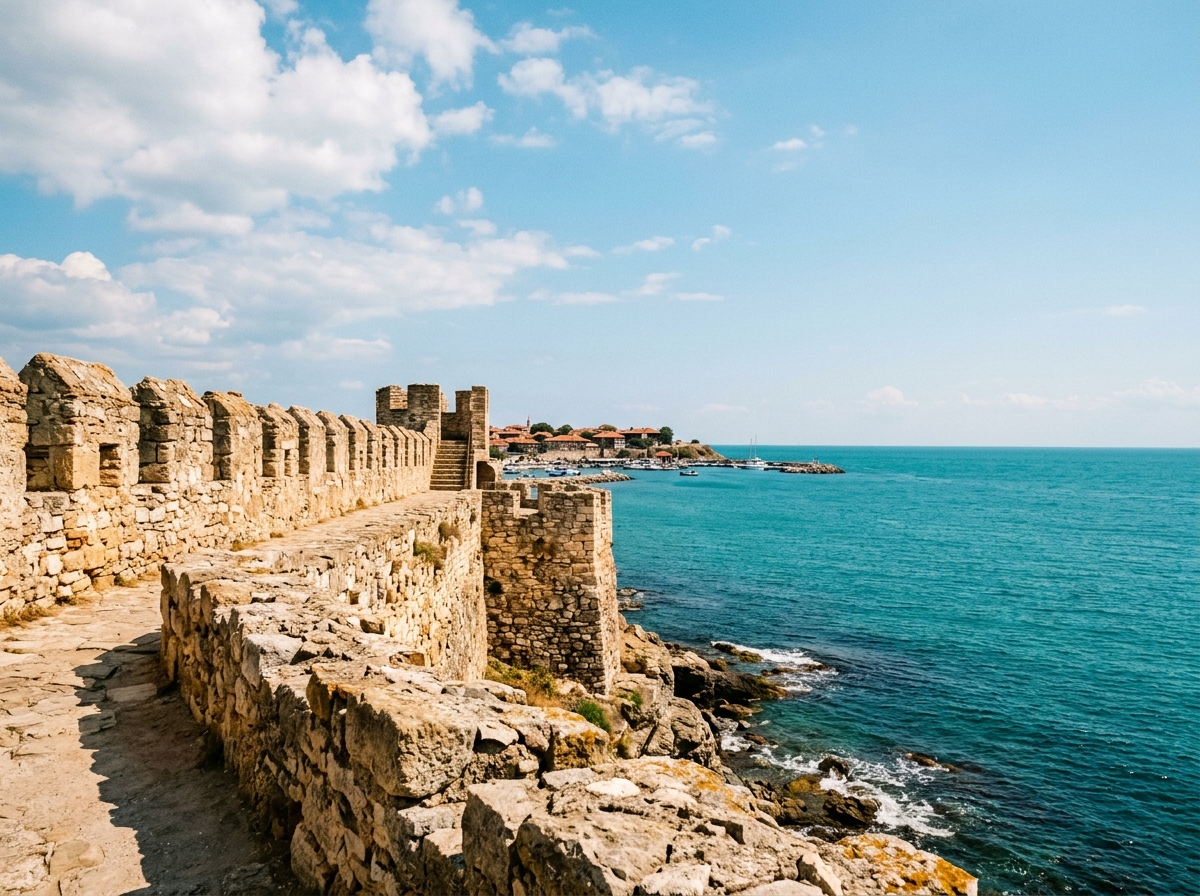
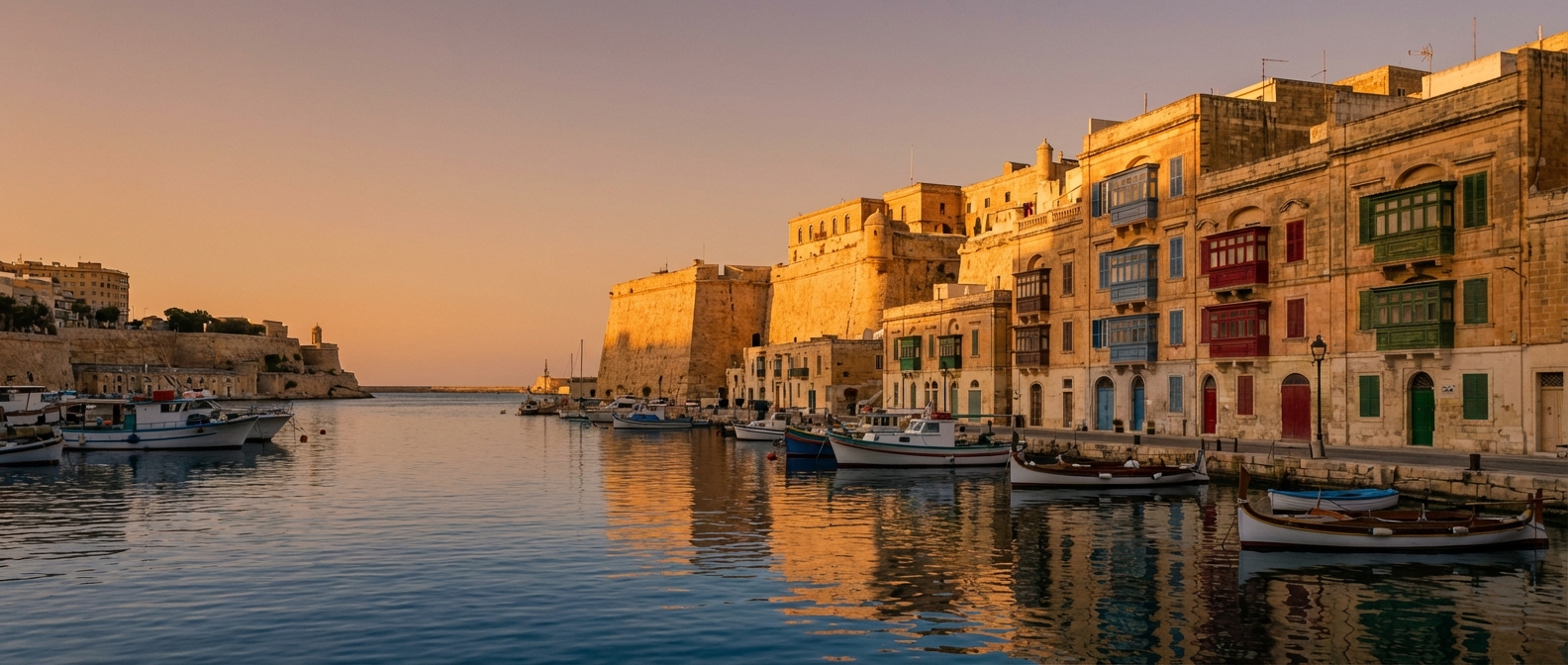

Malta and Bulgaria are both EU members with active Double Tax Treaties with major economies including the UK. Both offer potential tax advantages. However, the similarities largely end there.
In terms of taxation, Malta offers an effective corporation tax of 5% via its refund system - half of Bulgaria's 10%. The difference becomes even clearer with dividend taxation: in Malta, the effective tax on dividends after the refund is 0%, whereas in Bulgaria it is 5%. For entrepreneurs with higher profits, this difference adds up significantly.
As a holding location, Malta is much more strongly positioned. The Participation Exemption in Malta covers both dividends and capital gains from qualifying holdings. While Bulgaria exempts dividends received from EU subsidiaries from tax, capital gains are taxed regularly at 10%. For exit scenarios - i.e., the sale of company shares - this is a considerable disadvantage.
Regarding legal certainty and international reputation, Malta is far ahead. Malta's legal system is based on the Common Law tradition, contracts are reliably enforced, and Malta is an established international financial centre. Bulgaria ranks low within the EU on the Transparency International Corruption Index. The judiciary is perceived as not being fully independent.
Bulgaria's genuine advantage lies in the cost of living: rents, groceries, and services are 50% or more below Malta levels. For solopreneurs with modest turnover, digital nomads, and retirees, this can outweigh the tax difference. For entrepreneurs with significant profits, holding requirements, or a desire for an English-speaking business environment, Malta remains the more robust choice.
Malta offers the lower effective tax burden (5% vs 10% CT), better holding structures, and higher legal certainty. Bulgaria scores points on cost of living and the simplicity of its flat tax system.

For entrepreneurs leaving high-tax jurisdictions, exit tax implications must be considered. For UK residents, leaving the UK generally implies a 'clean break' with no immediate capital gains tax on shares, provided you remain non-resident for at least five years (Temporary Non-Residence rule). However, moving to Bulgaria brings you into the Bulgarian tax net immediately.
For citizens of EU countries (like Germany or France), moving to Bulgaria triggers exit tax rules, but EU membership often allows for a deferral of payment. This is the same mechanism as moving to Malta: EU protection means the possibility of deferral, not necessarily exemption.
A key difference arises when comparing to non-EU jurisdictions like Dubai, where exit taxes from EU countries are often immediately due. Bulgaria, being in the EU, offers a softer landing for EU nationals, while for UK nationals, the primary concern is ensuring they fully break tax residence in the UK to avoid HMRC scrutiny.
Bulgaria treats cryptocurrencies as financial assets. Profits from the sale or exchange of cryptocurrencies are taxed at the standard flat tax of 10%. Merely holding cryptocurrencies is not a taxable event.
Since June 2025, the MICAL (Cryptocurrency Markets Act) has been in force, implementing the EU-wide MiCA regulation into Bulgarian law. For private investors, this changes little regarding taxation - the 10% rate remains. For crypto companies (exchanges, wallet providers), MICAL creates a regulatory framework.
Compared to Malta, Bulgaria is less attractive for crypto gains. Malta allows for an effective taxation of 0% to 5% on crypto yields through structured corporate management. Bulgaria's 10% flat tax is simpler but twice as high. For HNWIs with significant crypto positions, Malta is clearly the better choice.
We analyse your business model, your target markets, and your tax situation in your home country. The result is a clear recommendation.
Together, we design the optimal corporate structure: Holding, operating company, refund setup. Tailored to your individual situation.
We guide you through the entire formation process: Memorandum and Articles of Association, registration, tax registration, bank account opening. Timeframe: 6 to 8 weeks.
Organising your change of residence: Residence permit, registration, social security, finding accommodation. Everything from a single source.
Accounting, annual financial statements, tax returns, refund applications. We remain your contact for all tax and legal questions.

In a free initial consultation, we analyse your business model and show whether Malta is the more suitable choice for your situation. Honest, fact-based, and without sales pressure.
Establishment of your Malta company including tax structure, bank account, and registration.
Learn more
Tax structuring for international entrepreneurs. Treaty optimization, refund system, exit tax planning.
Learn more
Residence permit, change of residence, and integration. From registration to social security.
Learn more
Senior New Business Manager
Company Formation · Tax Structuring

Tax Transformation Leader
Tax Advisory
Transparency matters to us. Here you will find answers to the most common questions on this topic.
For entrepreneurs operating via a Bulgarian OOD (Ltd): 10% Corporation Tax on profit plus 5% Withholding Tax on dividends. Effectively, this results in around 14.5%. Additionally, social security contributions apply up to the contribution ceiling of EUR 1,917 per month. Income above this is subject only to the 10% income tax.
No. The Pillar 2 minimum tax of 15% applies exclusively to groups with a consolidated annual turnover exceeding EUR 750 million. For typical international entrepreneurs and SMEs, the 10% rate remains unchanged. Bulgaria has implemented the directive, but most companies are not affected.
Cryptocurrencies are considered financial assets in Bulgaria. Profits from sale or exchange are taxed at a 10% flat tax. Merely holding crypto is not taxable. Compared to Malta (optimisable to 0-5%), this is a higher rate. Since June 2025, the MiCA implementation (MICAL) applies to crypto companies.
To a limited extent. Bulgaria offers a Participation Exemption for dividends from EU subsidiaries (tax-free at the holding level). However, capital gains from share sales are regularly taxed at 10% - there is no exemption as in Malta or Cyprus. For holding structures with a planned exit, Malta and Cyprus are better positioned.
Bulgaria ranks near the bottom of the EU in the Transparency International Corruption Index. The EU Commission has repeatedly admonished the country for insufficient anti-corruption measures. While the situation has improved for small business administration, risks remain for larger investments and permitting processes. For serious business operations within the EU framework, the issue is manageable, but it is a factor one should be aware of.
We do not advise on company formation in Bulgaria. Our specialisation is Malta. However, in an initial free consultation, we can assess whether Malta is the more suitable alternative for your business model - especially if holding structures, low effective tax rates, or an English-speaking environment are priorities.
Next step
In a free initial consultation, we analyse your business model and show whether Malta is the more suitable choice for your situation. Honest, fact-based, and without sales pressure.

Roderick Galea
Managing Partner

Nathaniel Borg
Partner



and the team in Malta

Corporate Services at DW&P Dr. Werner & Partners are provided by DW&P Services Ltd. (C 103208) which is regulated by the MFSA and is licensed under Authorised Person ID: DSER-23577 to carry out the activities of a Class C CSP in terms of the Company Services Providers Act (Cap. 529 of the Laws of Malta).


