
Frequently Asked Questions
Answers to the most common questions about company formation, tax structuring, relocation and ongoing operations in Malta.
95 questions and answers
General Questions
Yes, absolutely. Malta is a full EU member state and subject to all European regulations. A properly structured Maltese company is 100% legal and tax-compliant. What matters is getting the implementation right with genuine substance on the ground - and that's exactly what we ensure with our CSP Class C licence.
Costs vary depending on the complexity of your situation. In the free initial consultation you'll receive a transparent quote with no hidden fees.
With our experienced team and direct contacts at the authorities, we can typically get a fully operational Maltese company up and running within 6 to 8 weeks. More complex structures or additional licences may take a bit longer.
For a tax-effective structure, genuine substance is required. In most cases that means: yes, you or at least part of your business operations should actually relocate to Malta. We'll give you an honest assessment of whether Malta is the right jurisdiction for your situation.
CSP stands for Company Service Provider. The MFSA (Malta Financial Services Authority) issues CSP licences in three classes. Our Class C licence is the highest tier and authorises us to offer the full spectrum of corporate services. It's your quality mark for a serious, regulated provider.
Our team advises in English, German and Maltese. With deep expertise in European tax systems and cross-border structuring, we understand the complexities entrepreneurs face when relocating internationally - which gives us a real edge when advising clients from the UK and across Europe.
With a correctly structured Malta setup, you are well prepared for enquiries from your home country's tax authority. We document everything from the outset so that the structure withstands scrutiny. Pre-departure tax planning, including Temporary Non-Residence considerations and disposal timing, is handled properly in advance.
No. Our core focus is European and international entrepreneurs, but we also work with poker players, streamers and influencers who need a Maltese company for their income. We likewise support private individuals relocating to Malta and advise high-net-worth individuals on wealth and tax strategies. We have a dedicated information page for each client group.
Company formation is just the beginning. After that you'll need accounting, payroll, ongoing compliance and potentially further services. Most of our clients stay with us long-term because we provide all of this under one roof - with a dedicated point of contact who knows your setup.
Pre-departure tax planning is one of our core competencies. When you relocate as an entrepreneur, your home jurisdiction may tax unrealised gains or impose anti-avoidance rules such as the UK's Temporary Non-Residence provisions. We review your exposure, advise on the timing of disposals and relief eligibility, and coordinate with your local accountant to ensure no unwelcome surprises.
Formation
Company Formation Malta
Yes. Malta provides a clear legal basis for limited companies and one of the lowest effective corporate tax rates in the EU. The key requirement for tax recognition is genuine economic substance on the ground.
A registered address is mandatory. A local director isn't strictly required, but can be useful for meeting substance requirements.
Yes. Additional documentation such as certified passport copies or apostilles may be needed. We coordinate the entire process for you.
Absolutely. Our service package covers accounting, tax advisory, and annual compliance support - so you've got everything in one place rather than juggling multiple providers.
Particularly for holding structures within the EU. We advise on tax advantages, dividend strategies, and exit scenarios.
Economic substance means real business activity in Malta - an office, staff, contracts, or local value creation. Without substance, the tax status of your company is at risk.
Yes. Since September 2025, individuals who become tax resident in Malta can opt into the FITWI regime (Final Tax on Income from Work and Investment, Legal Notice 188/2025), which applies a flat 15% rate to income from employment, self-employment and investment. A minimum annual tax of €15,000 applies. The regime sits alongside the existing system - it doesn't replace the corporate tax or 6/7ths refund mechanism. For entrepreneurs combining company formation with a personal relocation, it can simplify the overall tax picture considerably.
International Tax Advisory
No. We advise on an individual basis - and in the majority of cases we recommend against proceeding if the conditions aren't met. Without genuine substance, real presence and tax transparency, a Malta structure is neither legal nor sensible.
Local tax advisers know their own jurisdiction. We connect multiple jurisdictions from both a tax and legal perspective. That means we can see how relocating from the UK affects your Malta structure - and the other way round.
After a free initial consultation, we analyse your situation, define clear objectives and develop a tailored strategy from there. During implementation, we work closely alongside you - with a dedicated point of contact.
No. Informing HMRC of your departure alone isn't sufficient to be treated as non-resident for tax purposes. What matters is where your actual centre of life is - and you need to be able to demonstrate that if challenged.
Yes. We support clients through business sales, restructurings, relocations and share-for-share exchanges - including tax valuations, documentation and mitigation of future HMRC enquiry risks.
Yes. We work exclusively within the bounds of current legislation and international standards - OECD, CRS, EU directives. Tax optimisation is legal. Tax evasion is not. We know the difference inside out.
Since September 2025, Malta has introduced an optional flat tax rate of 15% on income from employment, self-employment and investment under the FITWI regime (Final Tax on Income from Work and Investment, Legal Notice 188/2025). It's available to individuals who become tax resident in Malta and comes with a minimum annual tax of €15,000. The regime is designed to simplify Malta's tax proposition significantly - but it sits alongside the traditional corporate tax and 6/7ths refund system, not in place of it. Whether FITWI makes sense for your situation is something we'd work through in an initial consultation.
Setup
Relocation to Malta
Not necessarily. Tax liability depends on whether you genuinely relocate your centre of life, meet certain minimum stay requirements, and demonstrate economic substance. We review your specific situation and clarify the tax consequences of the move - both in Malta and in the UK.
Beyond the formal registration, it comes down to actual presence, a demonstrable centre of life, and economic activity on the ground. We make sure your relocation meets the substance requirements that HMRC and the Maltese tax authorities both expect.
Yes. We support family members, partners, and household staff just as we do employees being transferred to Malta by their company. Residence rights, registrations, insurance, school selection - all handled in one place.
We work with structured processes, checklists, and timelines tailored to your internal workflows. Your HR department receives regular status updates and has a dedicated contact person on our side.
We continuously monitor all developments in Maltese residence and tax law and proactively notify you when action is needed. You don't have to keep track of it yourself.
No. Work permits are a separate service we offer independently. In practice, many clients combine both - and we coordinate the timelines accordingly.
Work Permits Malta
Any non-EU/EEA national wishing to work in Malta – whether employed or through their own company. Even if you already have an employment contract, a formal permit process via Identitá is mandatory.
It depends on your role and qualifications. The Single Permit is the standard route for most employees. The Key Employee Initiative is designed for highly qualified professionals and executives with a specific salary threshold. We review your situation and recommend the right path.
Yes. We handle the entire procedure – from employer registration with JobsPlus to documentation and follow-up with Identitá. Your HR department simply needs to provide basic employee data.
We analyse the reason for rejection, assess the prospects of an appeal, and develop a revised strategy for resubmission. In many cases, a rejection can be overturned by correcting specific details.
Yes. Under family reunification rules, spouses and minor children can obtain their own residence permits. We submit these applications in parallel with the main application.
Processing times at Identitá vary – typically between four and twelve weeks depending on the permit type and completeness of documents. Our experience and thorough preparation help avoid delays caused by requests for further information.
Bank Account Opening
It depends on the bank. With traditional banks like BOV or HSBC Malta, expect 4 to 8 weeks from submitting a complete application. EMIs and international payment providers can sometimes open within 1 to 2 weeks. Timelines stretch out if documents need to be resubmitted.
In most cases, yes. The majority of Maltese banks require at least one in-person appointment for identity verification. We schedule this so it lines up with other commitments on the island – a notary appointment for company formation, for instance.
In principle, yes – but the bar is higher. Not all banks accept non-residents, and the documentation requirements are more extensive. We identify the banks that are right for your particular situation.
Local banks (BOV, HSBC Malta) offer the full range: IBAN, transfers, credit facilities, and deposit protection. EMIs like Wise Business or Revolut Business are faster to open and often cheaper for payments, but they don't offer traditional lending. Some EMIs such as Wise don't offer deposit protection either. Others, like Revolut, now hold a full EU banking licence with deposit guarantee up to EUR 100,000. Depending on your business model, a combination of both can make sense.
Rejections happen – particularly with business models that banks consider higher risk, such as e-commerce or crypto. When that occurs, we present you with alternatives: a different local bank, an international payment provider, or a revised application approach.
Requirements vary by bank and account type. Typically you'll need: company documents (Articles of Association, Certificate of Incorporation, UBO declaration), personal identification for all authorised signatories, a business plan or description of your business model, proof of source of funds, and in many cases a reference letter from your current bank.
Serviced Desks Malta
Yes. Our serviced desks can be booked flexibly without long-term ties. This model is particularly suitable for clients who are in Malta regularly but not every day.
Yes. You can use our conference rooms subject to availability – for client meetings, presentations, or internal sessions.
No. Desk, monitor, chair, printer, and full infrastructure are provided. You just bring your laptop – we provide the rest.
We will clarify in the initial consultation whether this address can be used as your company's registered office. This depends on your corporate structure and substance requirements.
Yes. For an additional fee, our office team can handle your calls during business hours. We can forward calls or take messages as requested.
Usually, your workspace is ready for use within a few days of signing the agreement. We will discuss your needs and availability during the initial consultation.
Ongoing Operations
Accounting
We recommend monthly accounting so you always have transparency over your figures. If you are VAT registered, quarterly processing is the minimum legal requirement.
Typically: incoming invoices, outgoing invoices, bank statements, credit card receipts, contracts, and other relevant documents. You upload everything digitally via our platform—simple and secure.
DW&P handles all communication—from the annual audit to VAT-related queries from Maltese authorities.
Our system automatically reminds you of missing documents. Timely, transparent, and digital—ensuring your accounting never stalls.
Yes. Many clients start with DW&P and later switch to their own accountants. We support the transition and ensure a clean handover.
We submit applications digitally via the Maltese VAT portal on your behalf. You don't need to worry about a thing.
Payroll Services
Yes. We support companies worldwide that employ staff in Malta. Payroll is processed entirely under Maltese law, regardless of where your headquarters are located.
Yes. We handle the complete registration with JobsPlus, application for tax numbers, and social security registration.
Via our digital portal. Payslips are stored securely there and can be accessed at any time – even retroactively.
Yes. We advise on Maltese employment law requirements and can draft legally compliant contracts that meet local standards.
Of course. We answer questions about payslips, tax deductions, and social security contributions directly, taking the load off your HR team.
We monitor changes in Maltese legislation continuously and proactively adapt your payroll processes – without you needing to lift a finger.
Compliance Services
For companies in all regulated and non-regulated sectors – particularly financial service providers, CSPs, real estate agents, auditors, and gaming companies.
Malta follows the 5th EU Anti-Money Laundering Directive. This includes KYC obligations, risk analyses, document verification, and ongoing monitoring of business relationships.
Yes. We screen both individuals and legal entities – as well as their ultimate beneficial owners (UBOs) – against sanctions lists, PEP databases, and public sources.
Yes. We offer ongoing compliance support, including monitoring, data updates, and regular re-evaluation of your risk profile.
Absolutely. We provide complete, audit-proof documentation that meets the requirements of auditors and Maltese supervisory authorities.
We track all relevant changes in the Maltese and European regulatory environment and inform you proactively. We then adapt existing processes accordingly.
Legal Advisory Malta
We cover corporate law, commercial law, contract law, employment law, private law, and regulatory matters. For highly specialised areas like criminal law or specific IP litigation, we bring in trusted specialists from our network.
Yes. We advise on tenancy agreements, property purchases, employment contracts, wills, and dealings with local authorities (such as ID cards). These topics are often complex for expats and new residents.
We work closely with warranted Maltese advocates who represent your interests in court, tribunals, and before authorities. Our team coordinates the entire strategy to ensure consistency and keep you informed.
Malta combines elements of British Common Law with Continental Civil Law. This hybrid system affects everything from contracts to property rights. What works in the UK or Germany might not apply here, making local expertise essential.
Yes, and we highly recommend it. Many clients use us as their ongoing legal counsel. This saves time, avoids repetitive briefing, and ensures your advisors understand your business context inside out.
We analyse the facts, assess the legal position, and develop a negotiation strategy. The goal is always a settlement that makes commercial sense – avoiding the time and cost of court proceedings. If settlement fails, we guide you through the litigation process.
Specialist Mandates
Malta Gaming License (MGA)
It depends on your model. If you offer games directly to players (casino, betting, poker), you need a Gaming Service Licence (B2C). If you supply software or infrastructure to other operators, the Critical Gaming Supply Licence (B2B) is the one. The distinction isn't always black and white—that's what our initial consultation is for.
Costs include a one-off EUR 5,000 application fee, annual license fees (EUR 10,000–35,000), and minimum share capital (EUR 40,000–240,000), plus technical certification and advisory fees. A typical B2C project involves a mid-to-high six-figure investment. We provide a realistic breakdown for your specific case during the initial consultation.
Expect 4 to 8 months from the moment the full application is submitted. The actual timeline depends on how quickly documents are ready, the speed of the due diligence checks, and any queries from the MGA. Thorough preparation—especially regarding stakeholder documentation—can significantly speed things up.
Yes. The MGA requires a company registered in Malta (or EU/EEA) with a physical office and qualified key personnel on the ground. Servers must also be in Malta. If you don't have a Malta company yet, we handle the incorporation as part of the project.
Licensed companies must pass annual compliance audits, submit AML reports, document player protection measures, implement regulatory changes promptly, and pay annual fees. The company must also maintain positive equity at all times. We support you with these obligations on a continuous basis.
The MGA has opened up to cryptocurrencies as a payment method. It is possible, but comes with stricter compliance requirements—particularly regarding AML and player protection. We can advise on whether your specific crypto model fits the current regulations.
Services for HNWIs
Yes. Malta is an EU member state with a full regulatory framework that meets international standards (OECD, CRS, FATF). We work exclusively with legally robust structures—transparent, compliant, and audit-proof.
That depends on your objectives. A holding company is suitable for managing participations and consolidating profits. A trust offers asset protection and flexible succession arrangements. A foundation can permanently dedicate assets to a defined purpose. We explain the differences in detail and recommend the structure that fits your situation.
Absolutely. Many clients come to us with legacy structures that no longer fit their current asset situation or the regulatory landscape. We analyse your existing setup, identify weaknesses, and restructure where it makes sense.
Sooner than most people think. Many protective measures and tax optimisations cannot be implemented retroactively or under time pressure. If you are already facing a divorce, a creditor claim, or a tax issue, your room for manoeuvre is significantly limited. Prevention is key.
Yes, and that is important to us. We do not replace your tax advisor or lawyer in your home country—we complement and coordinate them. International structures specifically require a central point to hold all the threads together. We take on that role.
Not every asset holder needs a formal Family Office. But above a certain level of complexity—multiple jurisdictions, diverse asset classes, succession issues—a central coordination function is not a luxury, but a necessity. Whether as your own Single Family Office or a Virtual Family Office solution through our firm: we find the format that suits your needs.
Trademark Registration
That depends on your business scope. If you operate or plan to operate in more than one EU country, the EUIPO trademark is generally the more cost-effective solution. For purely domestic business, a national application might suffice. We advise you on which option makes sense for your situation.
Usually four to six months - provided there are no objections or oppositions. If oppositions occur, the process can take longer. We keep you updated at every step.
Yes. Word marks, figurative marks, shape marks, or combination marks can be registered in parallel or sequentially. We recommend a coordinated strategy that covers your actual protection needs.
We handle the defence in opposition proceedings. This includes examining the grounds for opposition, drafting a statement, and communicating with the EUIPO. In many cases, an opposition can be refuted or resolved by adjusting the classification.
The basic EUIPO fee for one class is 850 Euro. Each additional class costs extra. Our advisory and processing fees are separate. You will receive a transparent cost breakdown for your specific case during the initial consultation.
Yes. An EU trademark can be revoked upon request after five years of non-use. We inform you about usage requirements and help with documentation if your usage is ever challenged.
Yacht Registration Malta
No. Both individuals and companies can register yachts in Malta regardless of nationality. If the owner is not resident in Malta, a Resident Agent must be appointed. We fulfill this role for you entirely.
Yes. Provisional registration is possible during the construction or outfitting phase. Once completed, all necessary documents must be submitted to the Merchant Shipping Directorate for permanent registration. We handle the deadline monitoring and documentation.
Registration as a commercial yacht falls under the Commercial Yacht Code 2020. Your yacht must meet specific criteria—such as being over 15 metres in length, carrying a maximum of 12 passengers, and carrying no cargo. We coordinate all steps with recognised surveyors and authorities.
Malta offers EU legal certainty, an attractive tax framework, comparatively low fees, and an efficient regulatory environment. Its place on the Paris MoU White List underscores the international recognition of the Maltese register.
Ongoing fees depend on the size, type, and usage of the yacht. We will provide a customised cost breakdown based on your specific specifications.
Next step
Can't find your question?
In a free 30-minute consultation, our senior advisers will answer your individual questions. Confidential and without obligation.
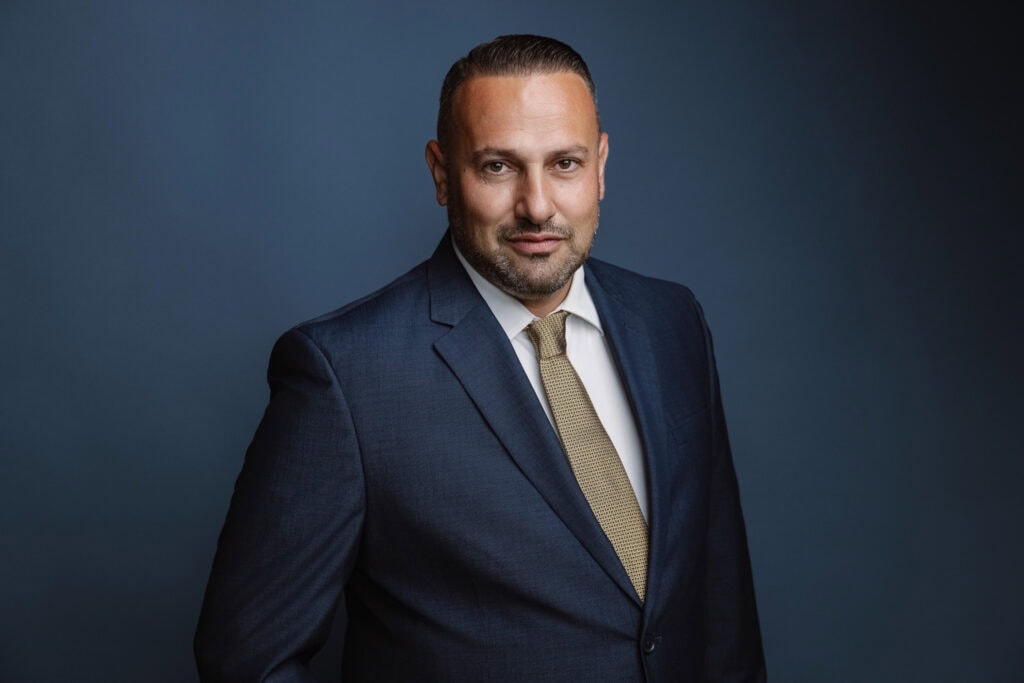

Roderick Galea
Managing Partner


Nathaniel Borg
Partner








and the team in Malta