 Susan Meier
Malta offers retirees a unique combination of EU membership, over 300 days of sunshine, English as an official language, and significant tax advantages. The Malta Retirement Programme enables a flat tax of 15% on foreign income. The cost of living is generally lower than in the UK or Northern Europe, the healthcare system is world-class, and integration is effortless thanks to the English-speaking environment and British legacy.
- Flat Tax (MRP)
- 15%
- Min. Tax/Year
- EUR 7,500
- Official Languages
- Maltese, English
- Sunshine/Year
- 300+ days
- EU Member Since
- 2004
- Flight Time UK-Malta
- ~3 hrs
- Rent 2-Bed
- EUR 800-1,500
- Inheritance Tax
- None (with planning)
- Double Tax Treaties
- 70+ Countries
Why Malta? Key Benefits for Retirees
Malta has developed into one of the most popular destinations for European and international retirees in recent years (Residency Malta Agency). The reasons lie in a unique combination that few other EU countries can offer:
- English as an Official Language: As a former British colony, English is an official language in Malta. Bureaucracy, doctor visits, and contracts are conducted in English as a matter of course—there is no language barrier to worry about.
- Mediterranean Climate: With over 300 days of sunshine per year and mild winters (averaging 14-16°C), Malta is one of the warmest countries in Europe. Central heating is rarely needed, even in winter.
- World-Class Healthcare: Malta's healthcare system ranks 5th worldwide according to the WHO (WHO). The public Mater Dei Hospital and various private clinics offer high-level care.
- Safety: Malta is one of the safest countries in Europe. The manageable size of the islands and the close-knit community contribute to a high sense of security.
- British Legacy: For UK retirees, Malta feels reassuringly familiar. Cars drive on the left, British three-pin plugs are standard, and the legal and administrative systems share many similarities with the UK.
- Connectivity: There are direct flights from most major UK and European airports, with a flight time of around 3 hours. Visiting friends and family back home is straightforward.
We have been guiding retirees through their move to Malta since 2013 and see a clear trend: More and more international retirees are choosing Malta for its combination of English language, EU framework, and tax efficiency. Experience shows that settling in happens much faster here than in most other Mediterranean countries.
Tax Benefits: Malta Retirement Programme & Flat Tax
The Malta Retirement Programme (MRP) is a special tax scheme for EU/EEA/Swiss nationals who wish to spend their retirement in Malta (Residency Malta Agency). It offers privileged taxation on pension income and other foreign income remitted to Malta.
Note for UK Nationals: Since Brexit, UK nationals may fall under the Global Residence Programme (GRP), which offers similar 15% tax benefits but has a higher minimum tax threshold (EUR 15,000).
How the Malta Retirement Programme Works
| Aspect | Details |
|---|---|
| Flat Tax on Foreign Income | 15% on income remitted to Malta |
| Minimum Tax (Malta) | EUR 7,500 / year |
| Minimum Tax (Gozo) | EUR 10,000 / year (from 2026) |
| Income Not Remitted to Malta | Not taxed |
| Local Maltese Income | Standard rates (0-35%) |
| Capital Gains (Foreign) | 0% (even if remitted) |
| Inheritance Tax | None (with proper structuring) |
Requirements for the MRP
- Property: Purchase from EUR 275,000 (Malta) or EUR 220,000 (Gozo/South Malta), alternatively rent from EUR 9,600/year (Malta) or EUR 8,750/year (Gozo).
- Health Insurance: Private health insurance covering Malta is mandatory.
- Income: Proof of regular pension income remitted to Malta.
- Presence: At least 90 days per year in Malta (and no more than 183 days in any other single jurisdiction).
Tax Treatment of Foreign Pensions
Thanks to Double Taxation Treaties (DTT) between Malta and many countries (including the UK), your pension is generally taxed in Malta, not in your home country. Your pension provider transfers the pension to your Maltese account. Under the MRP, you pay only a 15% flat tax on this amount, instead of potentially much higher progressive rates at home.
For a pension of EUR 60,000 annually, the savings can be significant:
| Scenario | High-Tax Jurisdiction | Malta (MRP) |
|---|---|---|
| Gross Pension | EUR 60,000 | EUR 60,000 |
| Approx. Tax Liability | ~EUR 15,000 - 20,000 | EUR 9,000 (15%) |
| Health Insurance | (Often included/subsidised) | ~EUR 2,000 - 3,000 (private) |
| Net (approx.) | ~EUR 40,000 - 45,000 | ~EUR 48,000 - 49,000 |
Note: The actual tax liability depends on individual factors (personal allowances, specific treaty terms). This calculation is for illustrative purposes. For a binding calculation, we recommend a personal tax consultation.
Utilise Tax Benefits as a Retiree in Malta
The Malta Retirement Programme offers substantial tax advantages, but correct registration and structuring are crucial. Dr. Werner & Partners has been advising retirees on tax-efficient relocation to Malta since 2013.
Cost of Living for Retirees in Malta
Overall, the cost of living in Malta is lower than in the UK or major Northern European cities. Groceries, dining out, and services are particularly affordable. However, rents in sought-after areas like Sliema and St. Julian's are comparable to other European city centres.
| Category | Cost/Month | Comparison to UK/North Europe |
|---|---|---|
| Rent 2-Bed (Central) | EUR 1,000 - 1,500 | Comparable |
| Rent 2-Bed (Suburbs) | EUR 800 - 1,100 | Cheaper |
| Rent 2-Bed (Gozo) | EUR 600 - 900 | Significantly cheaper |
| Groceries (2 People) | EUR 400 - 600 | ~10-15% lower |
| Restaurant (Mid-range, 2 ppl) | ~EUR 50 - 60 | Cheaper |
| Utilities (Water, Elec) | EUR 80 - 150 | Comparable |
| Private Health Insurance | EUR 150 - 350 | Depends on age |
| Internet + Phone | EUR 30 - 50 | Comparable |
| Leisure and Culture | EUR 200 - 400 | Comparable |
Budget Recommendation: A retired couple should budget for total monthly costs of EUR 2,500 - 3,500, depending on location and lifestyle. On Gozo, costs are typically 15-25% lower than on the main island of Malta.
A special advantage: Malta has no winter in the Northern European sense. Heating costs are minimal, and most retirees get by with a light jacket during the cooler months (December-February: 12-16°C).
Healthcare: Public and Private
Malta's healthcare system is among the best in the world. The WHO ranks it 5th in its global ranking (WHO Global Health Observatory). For retirees, medical care is a decisive factor, and Malta delivers convincingly here.
Public Healthcare System
As an EU citizen (or UK national with specific rights) holding an EHIC/GHIC or local entitlement, you may access public healthcare in Malta. This includes:
- General practitioner care via Health Centres (Polyclinics)
- Emergency care at Mater Dei Hospital (the island's main hospital)
- Specialist visits via the referral system
- Medication (co-payment may be required)
Private Healthcare
Many retirees in Malta combine public care with private supplementary insurance. Advantages of private care include shorter waiting times, private rooms, freedom of choice regarding doctors, and access to private clinics. Costs range from EUR 150 to 350 monthly for persons over 60, depending on the level of cover.
For the Malta Retirement Programme, private health insurance fully covering Malta is mandatory. An EHIC/GHIC alone is not sufficient for the application. Dr. Werner & Partners can advise on selecting suitable insurance solutions.
Pharmacies are well-distributed across Malta and offer many medications over the counter. Prices for standard medicines are often lower than in the UK. For chronic conditions, good planning regarding medication supply is important, as brand names may differ from what you are used to at home.
Residence and Visas: What You Need to Know
For EU citizens, moving to Malta is straightforward under freedom of movement rules. For UK nationals and other non-EU citizens, specific programmes like the Global Residence Programme or the Malta Permanent Residence Programme facilitate the move.
Registration Process (General)
| Step | Timeline | Details |
|---|---|---|
| Entry | Immediate | With valid passport or ID card |
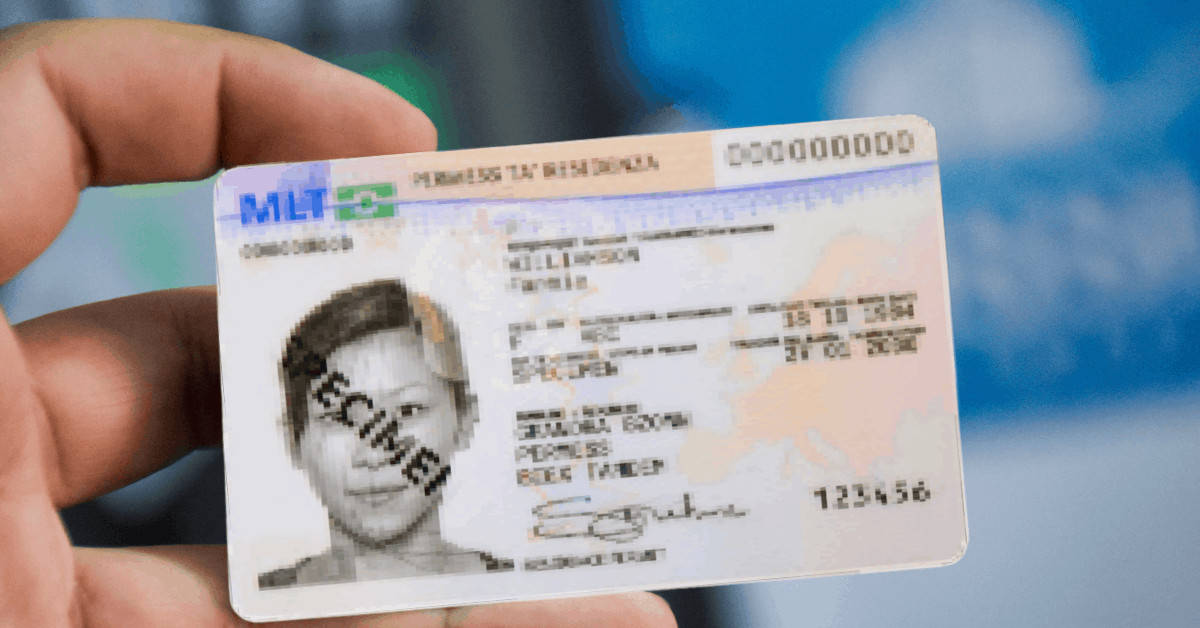
| eResidence Card | Within 3 months | Apply at Identity Malta; proof of income/capital required |
| Social Security Number | After registration | At the Department of Social Security |
| Tax Identification Number (TIN) | After registration | At the Inland Revenue Department |
| Bank Account | After eResidence | Maltese bank or international bank with Malta branch |
For the eResidence card, retirees must prove they have sufficient financial means not to become a burden on the Maltese social assistance system, and hold health insurance (Identità Malta). Pension income is accepted as proof of income.
Note on Tax Deregistration at Home: Anyone shifting their centre of vital interests to Malta should ensure they properly deregister for tax purposes in their home country (e.g., informing HMRC in the UK). This is a formal process. Dr. Werner & Partners supports this transition to ensure a clean break and avoid double taxation issues.
Property and Living: Renting vs Buying
The question of whether to rent or buy depends on your lifestyle and financial goals. Malta offers both options with varying conditions.
Renting: Flexible and Low Risk
For most retirees, we recommend renting initially. Spend at least 6-12 months orienting yourself before making a purchase decision. Rental contracts in Malta are typically for one year, with options to renew.
Buying: Long-Term Investment
| Property Type | Price Range | Location |
|---|---|---|
| 2-Bed Apartment | EUR 180,000 - 350,000 | Sliema, St. Julian's |
| 2-Bed Apartment | EUR 120,000 - 220,000 | Mellieha, Mosta, Naxxar |
| 3-Bed Apartment | EUR 250,000 - 500,000 | Central Areas |
| Maisonette/Terraced House | EUR 200,000 - 400,000 | Central Malta |
| Apartment on Gozo | EUR 100,000 - 200,000 | Victoria, Marsalforn |
Note for MRP/GRP: Minimum property values apply (e.g., EUR 275,000 in Malta and EUR 220,000 in Gozo/South Malta). These thresholds must be met to qualify for the 15% flat tax status.
Learn more about opening an account in our Guide to Maltese Bank Accounts.
The Best Locations for Retirees in Malta
| Location | Character | Best For? | Rent 2-Bed |
|---|---|---|---|
| Sliema | Urban, promenade, shops, dining | Active retirees wanting city life | EUR 1,200 - 1,500 |
| St. Paul's Bay | Quieter, affordable, British expat hub | Budget-conscious retirees | EUR 800 - 1,000 |
| Mellieha | Rural feel, sandy beach, quiet | Nature lovers, couples | EUR 800 - 1,100 |
| Gozo (Victoria) | Island life, slow pace, cheaper | Those seeking peace and authenticity | EUR 600 - 900 |
| Marsaskala | Fishing village, authentic, affordable | Local Maltese lifestyle | EUR 800 - 1,000 |
Our experience shows that most retirees feel most comfortable in St. Paul's Bay, Mellieha, or on Gozo. These places offer a genuine community, affordable rents, and sufficient infrastructure for daily life. Sliema and St. Julian's are livelier but also significantly more expensive.
Daily Life and Integration: Language, Culture, and Community
Malta is an English-speaking EU country, which makes integration incredibly easy for international retirees. Here are the key aspects of daily life:
Language
English is an official language—all government documents, bank contracts, and medical records are available in English. In daily life, most Maltese speak Maltese among themselves but switch effortlessly to English. You can live here for decades without needing to learn Maltese.
Expat Community
Malta is home to a very active international community. There are numerous social clubs, cultural associations, and informal networks for expats. The British influence is particularly strong, meaning you'll find familiar foods, brands, and social norms.
Mobility
Malta is a very compact island (316 km²). No point is more than 30 minutes from another (traffic permitting). The bus system connects all towns but can be unreliable. Many retirees use their own car or taxis. Uber and Bolt are active and affordable in Malta.
Driving: Malta drives on the left—just like the UK. For British retirees, this makes driving here completely natural. For others, it usually takes 2-3 weeks to adjust.
Shopping and Supplies
Malta has a wide range of supermarkets (Lidl, Welbee's, Greens, Pavi). International brands are widely available, and you'll find many British products (Waitrose, Marks & Spencer) in specific stores. Fresh local produce is available at village markets (e.g., Marsaxlokk Sunday market) at good prices.
Practical Checklist for Moving to Malta
- 6 months prior: Seek tax advice, prepare MRP/GRP application
- 4 months prior: Search for accommodation in Malta (renting first is recommended)
- 3 months prior: Arrange private health insurance, clarify pension transfers
- 2 months prior: Plan deregistration from home country authorities
- 1 month prior: Book removal company, set up mail forwarding
- Upon arrival: Apply for eResidence, Social Security Number, Tax Number, Bank Account
- Within 3 months: Complete tax deregistration at home, activate MRP/GRP status
Professional Support for Your Move to Malta
From preliminary tax planning to finding an apartment and registering with authorities: Dr. Werner & Partners has been guiding retirees through the entire move to Malta since 2013. We know the processes, the pitfalls, and the right people to talk to.
Malta vs Cyprus vs Portugal: Which Country Fits?
Three EU countries are particularly popular with retirees looking to emigrate. The choice depends on personal priorities:
| Criterion | Malta | Cyprus | Portugal |
|---|---|---|---|
| Language | English (Official) | English widely spoken | Portuguese |
| Climate (Winter) | 14-16°C | 15-18°C | 10-15°C (Lisbon) |
| Flat Tax Programme | 15% (MRP/GRP) | No specific retiree scheme | NHR (restricted/ended) |
| Min. Stay | 90 days/year | 60 days possible | 183 days |
| Rent 2-Bed | EUR 800 - 1,500 | EUR 500 - 1,500 | EUR 700 - 1,500 |
| Safety | Very High | Very High | High |
| Flight Time from UK | ~3 hrs | ~4.5 hrs | ~2.5 hrs |
| Healthcare | Top 5 Europe | Rank 4 (InterNations) | Good, waiting times |
| Island Feel | Yes (316 km²) | Yes (9,251 km²) | No |
Malta is best for retirees who: Prefer English as a daily language, appreciate the compact island size, want to utilise an attractive tax programme, and value a world-class healthcare system.
Cyprus as an alternative: For retirees with a higher budget who want more space and a lower minimum presence (60 days). Read more in our Cyprus Relocation Guide. A detailed tax comparison between both locations can be found in our Overview of Tax Regulations in Cyprus 2026.
Both locations have their merits. Malta wins retirees over with English as an official language and the structured MRP programme. Cyprus offers more land mass, lower rents outside Limassol, and the 60-day rule for flexible global citizens. We provide honest advice on which location fits your individual profile.
Free Initial Consultation: Malta or Cyprus?
Whether Malta or Cyprus—the right choice depends on your pension, your lifestyle, and your tax goals. In a free initial consultation, we will clarify together which location suits you best. Dr. Werner & Partners has been guiding retirees moving to the Mediterranean since 2013.
Frequently Asked Questions
What is the flat tax rate for retirees in Malta?+
Can I receive my foreign pension in Malta?+
How much does it cost to retire in Malta?+
Do I need private health insurance in Malta?+
Is Malta safe for retirees?+
Can I live in Malta speaking only English?+
Further Articles and Services
- Tax Advisory: Tax Planning for Retirees in Malta
- Relocation Service: Moving Support for Malta
- Opening a Bank Account in Malta
- Moving to Cyprus 2026: The Complete Guide
- Tax Regulations in Cyprus 2026: CIT, Non-Dom, SDC in Detail
- Cost of Living Cyprus 2026: What Does Life Cost?
- Company Formation Malta: The Malta Limited
- Contact: Book a Free Initial Consultation