


The S. FamilyRelocated to Malta, 2 children
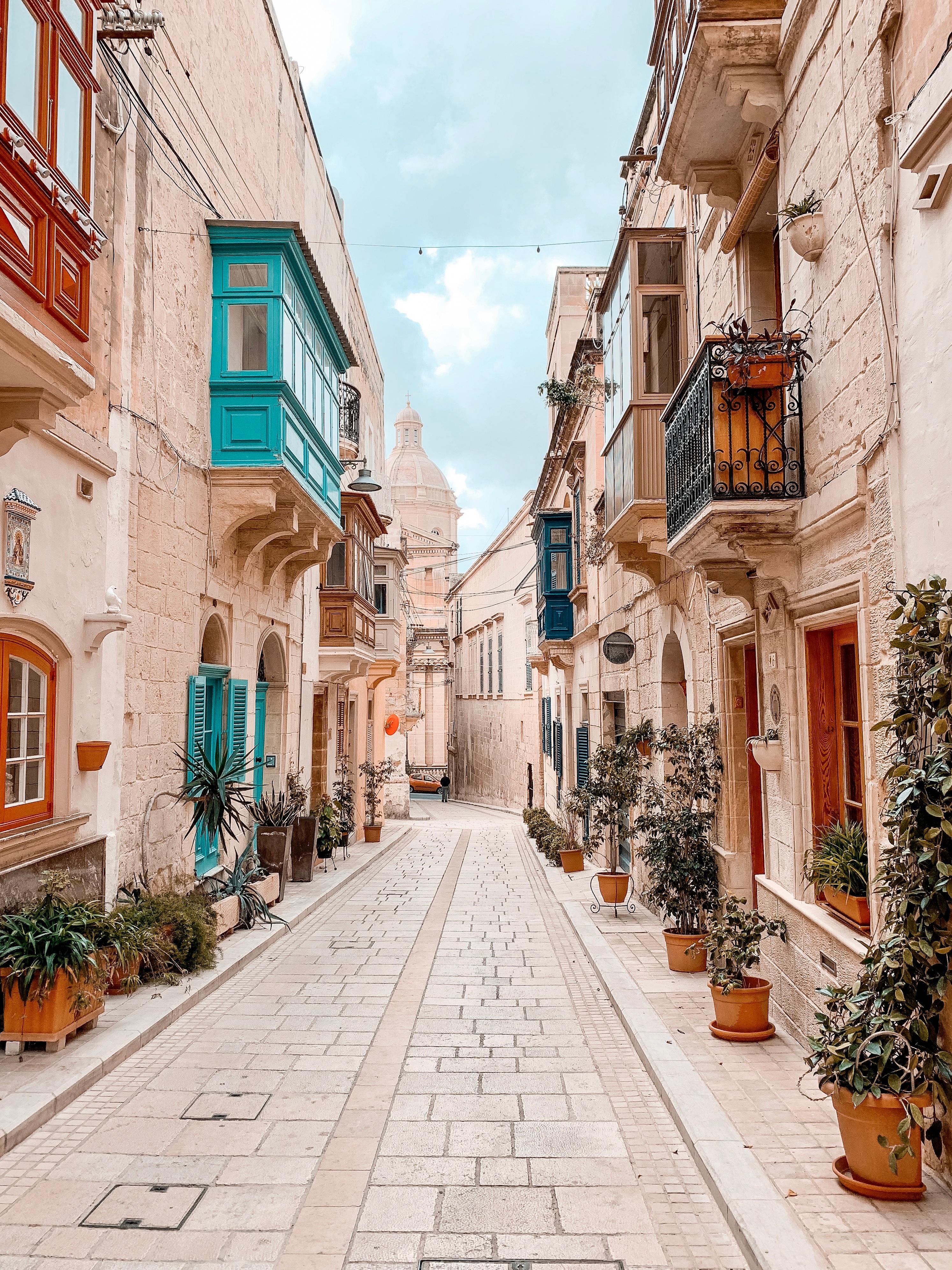
For Families
Relocating to Malta with Your Family: Schools, Taxes & Residency
Malta offers international families EU security, a mild climate, and the attractive Non-Dom tax regime. However, choosing the right school, navigating changes to child benefits, and managing the tax implications of relocating require careful planning. We guide you through the entire process.
Since 2013 · CSP Class C · MFSA Regulated
At a Glance
International families in Malta benefit from the Non-Dom status: foreign capital gains are tax-free, and a minimum tax of EUR 5,000 a year applies if foreign income of at least EUR 35,000 is not fully remitted to Malta. International schools typically cost EUR 1,000 to EUR 1,700 per month per school-age child. Freedom of movement within the EU makes the move bureaucratically simple, but potential exit taxes on company shares must be planned before relocating.
Why Families Relocate to Malta
Malta is an EU member state with full freedom of movement. EU citizens need neither a visa nor a work permit. The island is compact, distances are short, and the crime rate is low. For families, this means a safe environment where children can play outside almost all year round. English is an official language alongside Maltese, making the linguistic transition much easier for children compared to countries like Spain or Portugal.
The Non-Dom tax regime is particularly attractive for families with foreign income. Foreign capital gains are tax-free, even if remitted to Malta. Foreign income that is not transferred to Malta also remains tax-free. Resident non-domiciled individuals who are not under a special programme such as the Global Residence Programme (GRP) pay a minimum tax of EUR 5,000 a year if their foreign income (combined for jointly assessed married couples) is at least EUR 35,000 and is not fully remitted to Malta. Malta maintains an extensive network of double tax treaties worldwide.
The infrastructure for families is well-developed. Several international schools offer English-language instruction following international curricula (IB, British, American). Medical care is solid, with the public Mater Dei Hospital complemented by excellent private clinics. Additionally, an active expat community makes it easy for families to settle in and make connections.
Compared to popular alternatives, Malta stands out. Portugal's NHR programme has been reformed for new arrivals, significantly limiting its tax benefits. Spain's Beckham Law only applies to employees and is bureaucratically complex. While Dubai offers zero percent income tax, it is outside the EU, culturally distant, and the summer heat can be challenging for families with children. Malta offers the perfect compromise: within the EU, highly tax-efficient, and culturally European.
Location Comparison
Malta vs. Portugal vs. Spain vs. Dubai for Families
Malta, Portugal, Spain and Dubai for international families, compared on tax regime, schools, EU membership and cost of living.
| Jurisdiction | Tax Regime | Schools | EU Member | Cost of Living |
|---|---|---|---|---|
| Malta | Non-Dom (stable) | Int. Schools (EN) | Yes | Moderate |
| Portugal | NHR (reformed) | Int. Schools | Yes | Moderate |
| Spain | Beckham Law (limited) | Int. Schools | Yes | Moderate to high |
| Dubai | 0% Income Tax | Int. Schools | No | High |
- Schooling in English
- Most European countries do not have a national school in Malta, so families usually choose an international school that teaches in English. QSI and Verdala allocate places subject to availability.
- Non-Dom status with a minimum tax
- For Non-Doms, foreign capital gains are tax-free in Malta, even when remitted, and so is foreign income kept abroad. If foreign income of at least €35,000 is not fully remitted, a minimum tax of €5,000 a year applies.
- Dubai: no income tax, outside the EU
- Dubai levies no income tax but is outside the EU and culturally distant, and its summer heat can be challenging for families with children. The cost of living is high.
Non-Dom Status and Residency for Families
The Non-Dom (Non-Domiciled) status means you are resident in Malta but not domiciled there. Foreign income is taxed on the remittance basis: only foreign income actually transferred to Malta is subject to Maltese tax, while income arising in Malta is always taxable. Foreign capital gains are tax-free, even if remitted to Malta. Unless you are under a special programme such as the GRP, a minimum tax of EUR 5,000 a year applies if your foreign income (combined for jointly assessed married couples) is at least EUR 35,000 and is not fully remitted to Malta.
Residency rights for EU citizens are straightforward. Registration as an Ordinary Resident is done online via the Expatriates Portal. You must prove financial means of approximately EUR 23,000 for a married couple, plus EUR 2,400 per child. Comprehensive health insurance for the entire family is required. After five years of continuous residence, Permanent Residence is possible. For non-EU family members (such as a spouse from a third country), a separate residence permit is necessary. We handle this process for you as well.
A critical point for entrepreneurs: holding shares in domestic companies can trigger exit taxation or deemed disposal rules when you leave your home country. Your domestic tax authorities may apply a fictitious sale at fair market value, which can lead to a substantial tax burden. This planning must start well before your move, not after. Depending on your home country, deferral options may exist within the EU, but these are tied to strict conditions. DW&P coordinates this process closely with your local tax advisor.
- Minimum annual tax
- EUR 5,000
- Non-Dom Remittance Basis
- International schools (school age)
- ~EUR 1,000–1,700/month
- Fee schedules QSI, Verdala, Haileybury 2026/27
- Sunny days per year
- 300+
- Malta Tourism Authority
- Flight time from major European cities
- ~2.5 h
“Relocating to Malta with your family is not a spontaneous decision. The tax advantages of the Non-Dom status are substantial, but exit taxation and school selection must be planned early. Starting the process six months in advance significantly reduces stress.”
Dr. Jörg Werner
Founder of the law firm
International Schools in Malta: Costs, Curricula, and Recognition
There are no specific national schools for most European countries in Malta. International families typically choose one of the international schools offering English-language instruction. The best-known options are QSI International School of Malta in Mosta (US-oriented curriculum with Advanced Placement), Verdala International School in Pembroke (International Baccalaureate from kindergarten to Diploma), Haileybury Malta in Mtarfa (British curriculum) and St Edward's College in Birgu (Cambridge IGCSE, then the IB Diploma in the sixth form). Tuition for 2026/27 ranges from around EUR 2,800 to EUR 20,700 a year depending on school and year group, roughly EUR 240 to EUR 1,720 per month per child; at QSI, Verdala and Haileybury, families of school-age children usually pay EUR 1,000 to EUR 1,700 a month. On top come one-off admission fees of up to EUR 5,000 and, at some schools, annual capital contributions. Places are limited, so we strongly recommend applying early, ideally six months before your planned move.
Qualifications from these international schools are widely recognised by universities worldwide. The IB Diploma is particularly versatile and provides a solid foundation for studying internationally. British GCSE and A-Level qualifications are also universally accepted. State schools in Malta are free until the end of compulsory schooling at 16 for children from the EU, the EEA and Switzerland, and for third-country nationals holding a Single Permit. Lessons are taught in Maltese and English, and Maltese is compulsory for all pupils, which makes state schools a hurdle for families staying only a few years.
Child Benefits, Health Insurance, and Living Costs
When leaving your home country, you will likely lose your domestic child benefits. Malta's equivalent, the Children's Allowance, is approximately EUR 450 per child per year. While this difference must be factored into your financial planning, the loss is usually more than compensated for by the significant tax advantages of the Non-Dom status.
EU citizens can access the public healthcare system using the European Health Insurance Card (EHIC) or the S1 form. However, we recommend private health insurance for shorter waiting times and broader coverage. The cost for a family of four is roughly EUR 200 to EUR 400 per month. The public Mater Dei Hospital offers excellent standards, and paediatricians are available in both the public and private sectors.
As a rough guide, monthly living costs for a family with two children include: rent for a 3-bedroom apartment at EUR 1,200 to EUR 1,800 (depending on location), groceries at EUR 400 to EUR 600, international schools for two school-age children at approx. EUR 2,000 to EUR 3,400, and health insurance at EUR 200 to EUR 400. The total estimated cost is around EUR 4,400 to EUR 7,200 per month. Costs are significantly lower in the south of the island and on Gozo compared to Sliema or St. Julian's.
Client Voices
What trust looks like in practice.
Our Process
- 01
Preliminary Tax Analysis
Analysis of your income situation, review of potential exit tax implications on company shares, and calculation of the tax impact of the move on your entire family.
- 02
Residency Planning & School Selection
Preparation of your Ordinary Residence registration, compiling necessary documents (income, health insurance, housing), and guidance on choosing the right school.
- 03
Property & Health Insurance
Assistance with finding a suitable property (family-friendly size and location) and setting up comprehensive health insurance for the whole family.
- 04
Relocation & Administration
Support with registration, residency applications for all family members, obtaining tax numbers, and opening a bank account in Malta.
- 05
Ongoing Support
Annual tax returns and communication with domestic and Maltese authorities. We remain your point of contact for any questions that arise after your move.
Your situation deserves an individual analysis.
In a free initial consultation, we assess whether and how Malta works for you.
Relevant Advisory Services
Your Contact


Horst Wickinghoff
Senior New Business Manager


Valentina Zammit Stojanovic
Payroll & Relocation




Frequently Asked Questions
Transparency matters to us. Here you will find answers to the most common questions on this topic.
Are there specific national schools for expats in Malta?
No, there are no specific national schools for most European countries. International families typically choose an international school with English-language instruction. The most popular are QSI (US-oriented curriculum), Verdala International (IB), Haileybury Malta (British curriculum) and St Edward's College (IGCSE and IB Diploma). For school-age children, QSI, Verdala and Haileybury cost around EUR 1,000 to EUR 1,700 per month per child in 2026/27; St Edward's is cheaper at roughly EUR 240 to EUR 920. Qualifications (IB, GCSE, A-Level) are widely recognised by universities globally.
What happens to my domestic child benefits?
You will generally lose your domestic child benefits when you deregister from your home country. The Maltese equivalent (Children's Allowance) is around EUR 450 per child per year, which is likely much lower. This difference should be factored into your financial planning. However, depending on your income structure, the tax advantages of the Non-Dom status usually more than compensate for this loss.
Will I face exit taxes if I hold shares in a company?
Depending on your home country's laws, holding shares in a domestic company can trigger exit taxation or deemed disposal rules upon relocation. Your domestic tax authorities may apply a fictitious sale at fair market value. Within the EU, there are often options for interest-free deferral over several years. Planning must begin well before the move - ideally 6 to 12 months in advance. We coordinate this process closely with your local tax advisor.
What is the medical care like for children in Malta?
Malta has a solid public healthcare system. EU citizens can access public care using the EHIC. Paediatricians are available in both the public and private sectors. We recommend private health insurance for shorter waiting times. The cost for a family of four is roughly EUR 200 to EUR 400 per month.
Can my children study at international universities later?
Yes. IB Diplomas and British A-Levels are recognised by universities worldwide. The IB Diploma is particularly versatile. It is important to actively maintain your children's native language skills if you plan for them to study in your home country later.
What are the living costs for a family of four?
As a rough guide for a family with two children: rent for a 3-bedroom apartment is EUR 1,200 to EUR 1,800, groceries EUR 400 to EUR 600, international schools approx. EUR 2,000 to EUR 3,400 (for two school-age children), and health insurance EUR 200 to EUR 400. Total estimate: approx. EUR 4,400 to EUR 7,200 per month. Living costs are significantly lower in the south of the island and on Gozo compared to Sliema or St. Julian's.
Next step
Planning a Family Move to Malta?
In a free initial consultation, we will review your tax situation, discuss school options, and provide you with a realistic timeline.
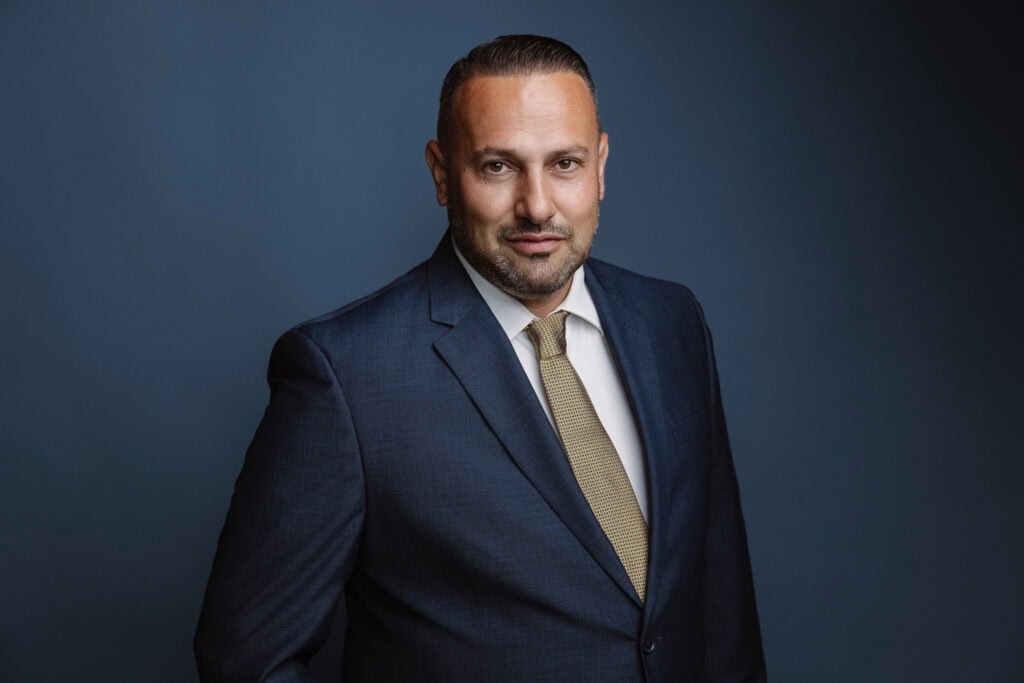

Roderick Galea
Managing Partner


Nathaniel Borg
Partner






and the team in Malta
